


Eco-Friendly Stationery in Eco-Conscious Classrooms and Schools
Eco-Friendly Stationery in Eco-Conscious Classrooms and Schools
Eco-conscious classrooms and schools find genuine sustainability in Twig Pencils' handmade apple wood pencils, crafted from sustainably sourced Winesap apple tree branches by artist h.m. Peavy. Each No. 2 graphite pencil, colored pencil, or seven-pencil set arrives made in the USA, offering educators plastic-free, biodegradable writing tools that replace conventional classroom supplies without sacrificing quality or function.
What makes stationery eco-friendly for classrooms?
Eco-friendly stationery for classrooms uses materials that reduce waste and avoid virgin plastic. Products earn this label when manufacturers make them from recycled, recyclable, or biodegradable inputs. The goal is to keep supplies out of landfills after a single school year.
How does material choice affect classroom sustainability?
The material composition of a pencil, notebook, or folder determines its environmental impact. Recycled paper products require less energy and water to produce than virgin paper. Biodegradable materials like wood, plant-based plastics, and natural fibers break down without leaving toxic residue. Eco-Friendly Stationery for Classrooms prioritizes these materials over conventional petroleum-based options.
What should teachers check before buying new supplies?
- Reuse existing items first. Check drawers for leftover pens, unfilled notebooks, and functional backpacks before purchasing anything new.
- Choose biodegradable writing tools. Twig Pencils offers handmade twig pencils crafted from sustainably sourced apple wood, giving classrooms a renewable alternative to plastic pens.
- Verify recyclability. Look for packaging and product labels that confirm the item can enter a standard recycling stream.
Eco-Conscious School Supplies start with a simple audit of what a classroom already owns. Sustainable Classroom Pencils made from natural wood eliminate the plastic waste that standard mechanical pencils generate.
How do sustainable classroom pencils reduce waste?
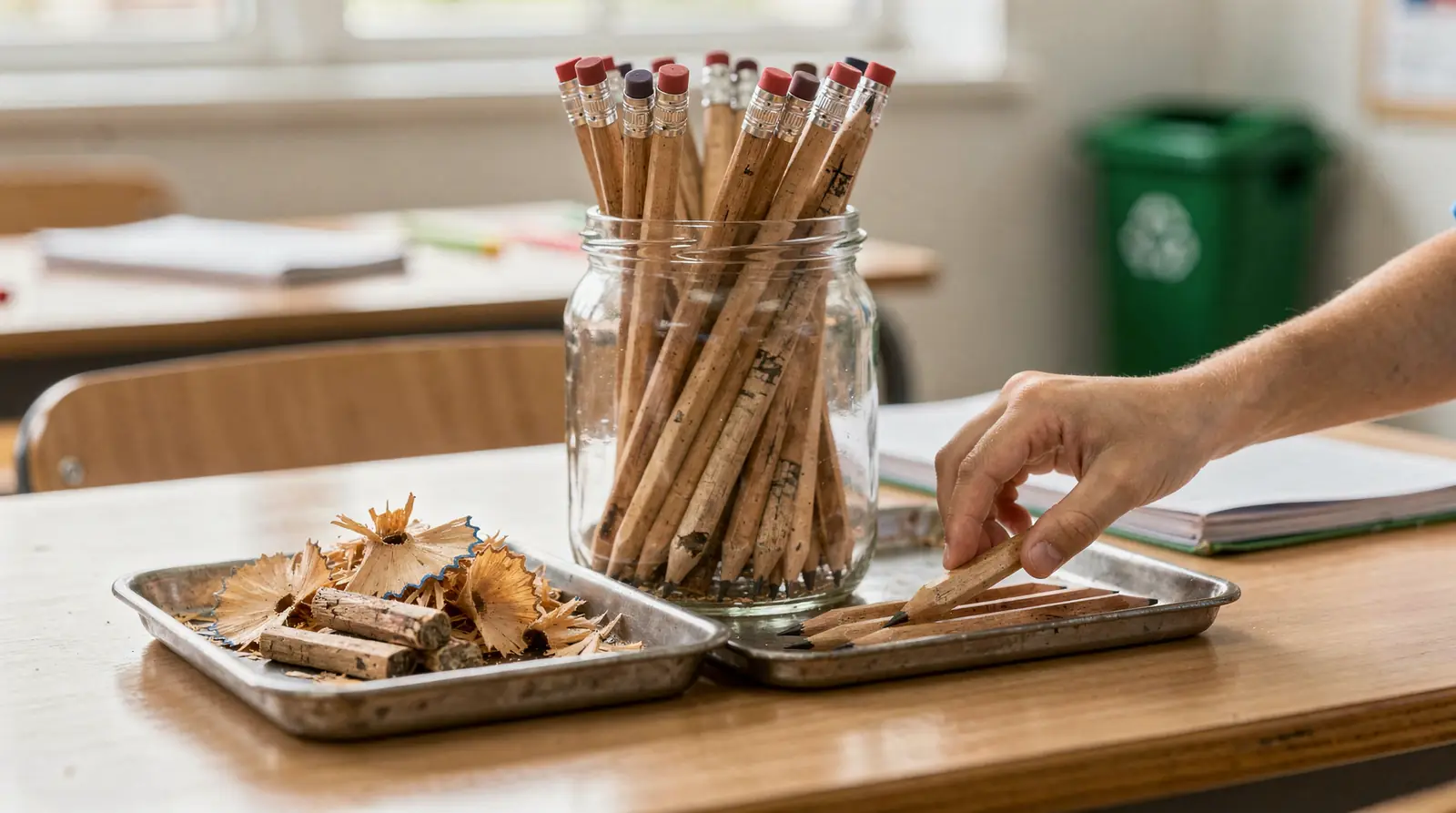
Sustainable classroom pencils reduce waste by replacing plastic-based writing instruments with natural, biodegradable materials. Handmade twig pencils crafted from sustainably sourced apple tree branches eliminate the plastic barrels found in conventional pencils. These Sustainable Classroom Pencils decompose naturally at end of life rather than sitting in landfills for centuries.
What materials make these pencils biodegradable?
Apple wood serves as the primary material for these pencils. The wood comes from pruned Winesap apple tree branches, a byproduct of orchard maintenance that would otherwise go to waste. No plastic, synthetic coatings, or non-biodegradable components enter the production process. The result is a writing tool that returns to the earth without leaving toxic residue.
How does shipping affect the environmental footprint?
All orders ship carbon neutral and plastic-free, extending waste reduction beyond the product itself. This shipping approach eliminates plastic packaging materials and offsets transportation emissions. Classrooms that choose Eco-Friendly Stationery for Classrooms receive supplies without the typical plastic wrapping and bubble mailers.
Eco-Conscious School Supplies offer additional waste-saving strategies:
- Reusing supplies from prior school years before purchasing new items
- Choosing pencils made from renewable wood sources rather than plastic
- Selecting products shipped without single-use plastic packaging
These practices cut classroom waste at every stage, from production through disposal.
Why Sustainable Classroom Pencils Beat Plastic Pens for Everyday Schoolwork
Sustainable Classroom Pencils start with a simple material swap that eliminates plastic waste from daily writing. A single plastic pen takes over 200 years to decompose in a landfill. A wooden pencil breaks down naturally in months. Twig Pencils crafts each pencil from sustainably sourced Winesap apple tree branches, giving every pencil a unique grain and shape that mass-produced plastic writing tools cannot replicate. This approach turns a disposable habit into a renewable cycle. Apple wood regrows faster than the trees used for conventional lumber.
The environmental cost of conventional school supplies is steep. EarthHero, which vets over 500 sustainable brands, reports that most standard pencils ship wrapped in plastic film and arrive in non-recyclable packaging. By contrast, Eco-Friendly Stationery for Classrooms prioritizes materials that return to the earth without leaving microplastics behind. Every Twig Pencil order ships carbon-neutral and plastic-free, and orders over $60 ship free across the United States. For a classroom of 30 students, switching from plastic mechanical pencils to wood alternatives keeps roughly 900 plastic barrels out of the waste stream each year.
Eco-Conscious School Supplies also perform better in practice. Graphite from a No. 2 apple wood pencil writes smoothly on standard notebook paper, and the natural hexagonal shape prevents rolling off desks. Twig Pencils offers individual colored pencils and a seven-pencil set. Teachers can stock an entire classroom without resorting to single-use plastic highlighters. The brand's artist, h.m. Peavy, hand-finishes each pencil, meaning no two tools in a class set look identical, which reduces the "mine got mixed up" problem that leads to lost and replaced supplies.
What to look for in Sustainable Classroom Pencils:
- FSC-certified or reclaimed wood that does not contribute to deforestation
- Plastic-free packaging that breaks down in home compost bins
- Non-toxic, water-based paints safe for younger students who chew on pencils
- Carbon-neutral shipping to offset the last-mile delivery footprint
- Durable graphite cores that resist breaking under heavy-handed writing pressure
The takeaway is straightforward: swapping plastic pens for Sustainable Classroom Pencils cuts landfill waste, supports renewable apple orchards, and gives students a writing tool that performs as well as it protects the planet. Start with a single seven-pencil set per student, and you have an entire Eco-Friendly Stationery for Classrooms solution that lasts the full academic year.
Conclusion
In closing, eco-friendly stationery transforms classrooms into spaces where learning and environmental responsibility align. Handmade pencils crafted from sustainably sourced materials demonstrate that quality writing tools need not compromise our planet's future. By choosing stationery that reflects genuine ecological values, educators and students alike invest in both their creative work and a healthier world for generations to come.