


Sharpening Handmade Branch Pencils: How to Care for and Sharpen
Sharpening Handmade Branch Pencils: How to Care for and Sharpen
Twig Pencils crafted from sustainably sourced apple wood require gentle handling and a sharp blade or standard pencil sharpener to maintain their rustic bark edge. Store in a dry place away from moisture, and sharpen slowly to preserve the natural branch shape and USA-made craftsmanship.
Apple wood pencils demand gentle, angled sharpening to protect the natural bark edge and expose graphite evenly. Twig Pencils are handmade in the USA from sustainably sourced apple wood, so a sharp utility knife. Standard sharpener works best, avoid excess pressure that splits the branch casing, and store pencils dry to preserve their rustic finish.
Proper care for Twig Pencils, handcrafted from Winesap apple tree branches, requires gentle, frequent sharpening with a quality sharpener to prevent wood cracking around the graphite core. Rustic, irregular shapes need slow, steady rotation rather than forceful pressure. Storing pencils in a protective case, like those offered with graphite options, prevents breakage between uses.
Why does sharpening handmade branch pencils require special care?
Handmade branch pencils from Twig Pencils demand a different sharpening approach than mass-produced pencils. Each pencil is crafted from sustainably sourced apple wood, giving every piece a unique natural shape and texture. That irregular form means a standard sharpener often fails to fit the wood correctly.
Graphite is a relatively soft material. The way an artist sharpens it directly affects line width, consistency, and even the longevity of the tool. A careless sharpen can snap the graphite or produce an uneven point.
What happens when a standard sharpener meets an irregular pencil?
A typical handheld sharpener assumes a perfectly round, uniform pencil barrel. A twig pencil, with its natural curves and bark texture, does not fit that mold. The blade may catch on the bark or cut unevenly into the wood, wasting material and damaging the point.
How does the wood type affect the sharpening process?
Apple wood is a dense hardwood. It holds a fine point well, but it also resists quick, aggressive sharpening. Rushing the process with a dull blade or excessive force can split the wood casing. Caring for Wood Pencils means using a sharp blade and working slowly, letting the tool cut the wood rather than forcing it.
What is the best method for how to sharpen twig pencils?
The best method for How to Sharpen Twig Pencils depends on the pencil's pigment. Handmade branch pencils with softer or fragile pigments require a hobby knife rather than a manual sharpener. A standard sharpener can crack or break delicate cores. The knife method gives the user full control over pressure and angle.
What tools are needed for the atelier sharpening method?
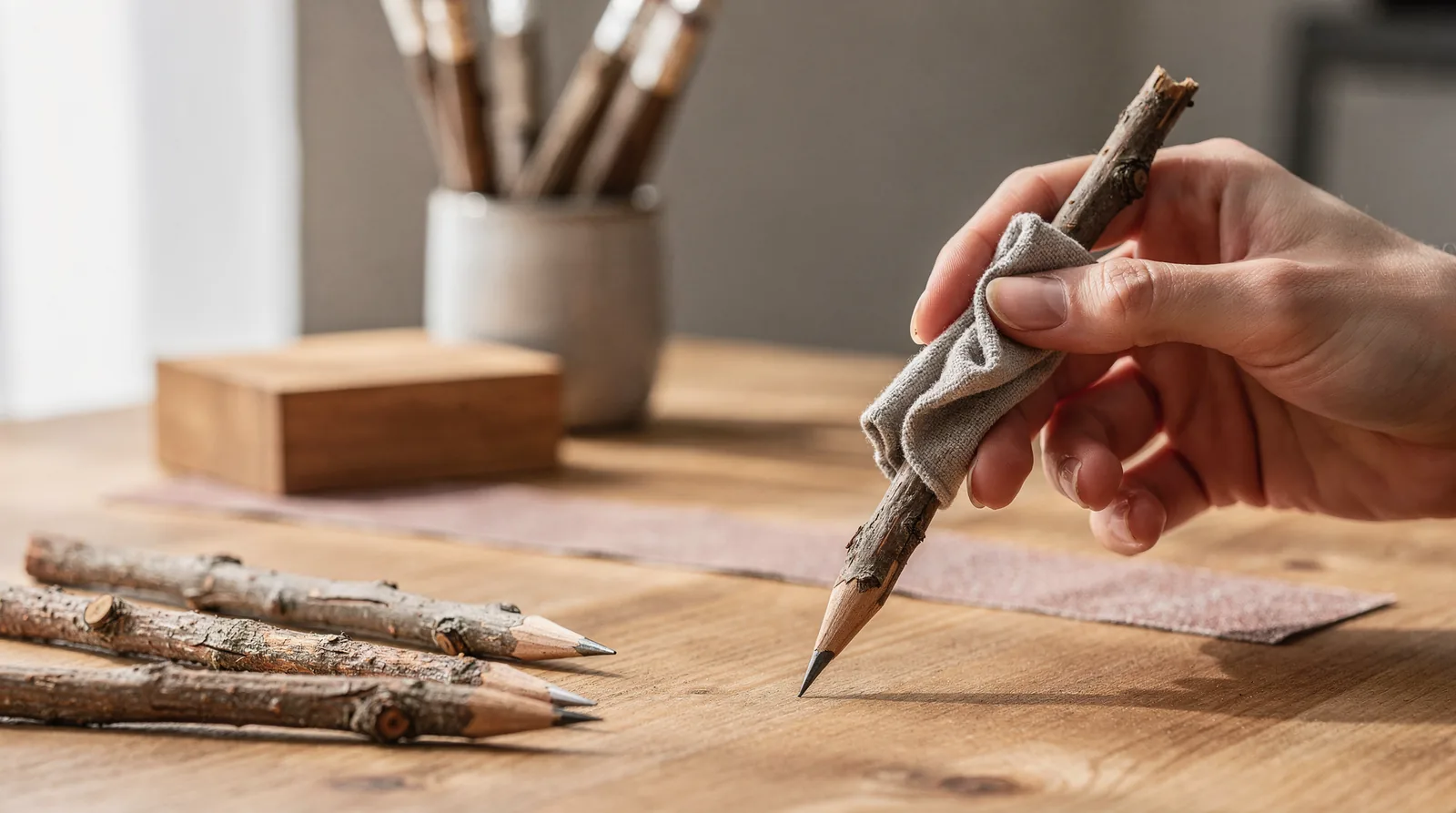
A utility knife and 220 grit sandpaper form the core tool kit for the atelier style. The process starts by positioning the pencil in the non-dominant hand and the blade in the dominant hand. The artist carefully removes the wooden barrel in thin layers to expose the graphite core without snapping it. Sandpaper then refines the point to a precise tip.
Why does the knife method protect fragile pigments?
- Manual sharpeners apply even, rigid pressure that shatters soft pigments.
- Hobby knives allow the user to stop at the first sign of resistance.
- Sandpaper smooths the exposed core without the torque of a spinning blade.
This approach extends the life of each handmade pencil and prevents the frustration of a broken point mid-sketch. Caring for Wood Pencils starts with the sharpening technique.
How can you extend the life of your twig pencils through caring for wood pencils?
Caring for wood pencils starts with the right sharpener. An effective pencil sharpener is a worthy investment for any artist. Pencils can be expensive, and a poor sharpener chews up the wood and damages the leads. That damage shortens the life of every pencil in the collection.
What makes a sharpener safe for handmade branch pencils?
A quality sharpener removes wood cleanly without snapping the core. Twig Pencils offers handmade apple wood pencils made in the USA. These rustic gifts suit artists and writers who value natural tools. The irregular shape of branch pencils demands a steady hand and a sharp blade.
How does proper sharpening protect the pencil?
Sharpening handmade branch pencils correctly preserves both wood and lead. A gentle, controlled twist prevents breakage. Rushing the process causes chipped points and wasted material.
- Use a sharp blade for clean cuts
- Rotate the pencil slowly
- Stop before the lead becomes too thin
A careful routine keeps each pencil usable for many drawings. The investment in a good sharpener pays off through longer-lasting tools.
Conclusion
In closing, caring for your handmade twig pencils honors both the craftsmanship and sustainable sourcing that goes into each piece. By mastering proper sharpening techniques and storage practices, you extend the life of these rustic writing instruments and deepen your connection to their natural apple wood origins. Your commitment to maintenance reflects the same thoughtfulness that Twig Pencils brings to creating pencils made right here in the USA, a partnership between you and the artistry behind every handcrafted twig.