


Sustainable Stationery: Eco-Friendly Choices for Your Desk
Sustainable Stationery: Eco-Friendly Choices for Your Desk
Sustainable stationery includes handmade twig pencils made from sustainably sourced Winesap apple tree branches, crafted by artist h.m. Peavy and sold through Twig Pencils. Each piece keeps its natural bark texture rather than uniform shaping. Options span No. 2 graphite pencils, individual colored pencils, and seven-pencil sets, all produced in the USA for writers, artists, and teachers.
What Makes Stationery Sustainable?
Sustainable stationery reduces the environmental harm caused by everyday writing tools. Most conventional pens and pencils are made from plastics that end up in landfills. Choosing instruments from renewable materials forms the core of a greener writing routine.
The scale of the problem is staggering. A Beginner's Guide to Sustainable Stationery reports that 422 million metric tons of paper were consumed globally in 2018. Producing one ton of conventional office paper requires 24 trees, which adds up to 10 billion trees per year.
How Do Materials Affect Sustainability?
The source of the material matters most. Plastics persist in landfills for centuries, while wood from managed sources regenerates. Renewable materials break the cycle of single-use waste.
What Role Do Brands Play?
A wave of eco-friendly stationery brands now offers greener alternatives for people who want to make a difference with every pen stroke. These brands prioritize materials that return to the earth instead of clogging it. The result is a writing habit that leaves a smaller footprint behind.
Why Sustainable Stationery Starts With the Wood You Write On
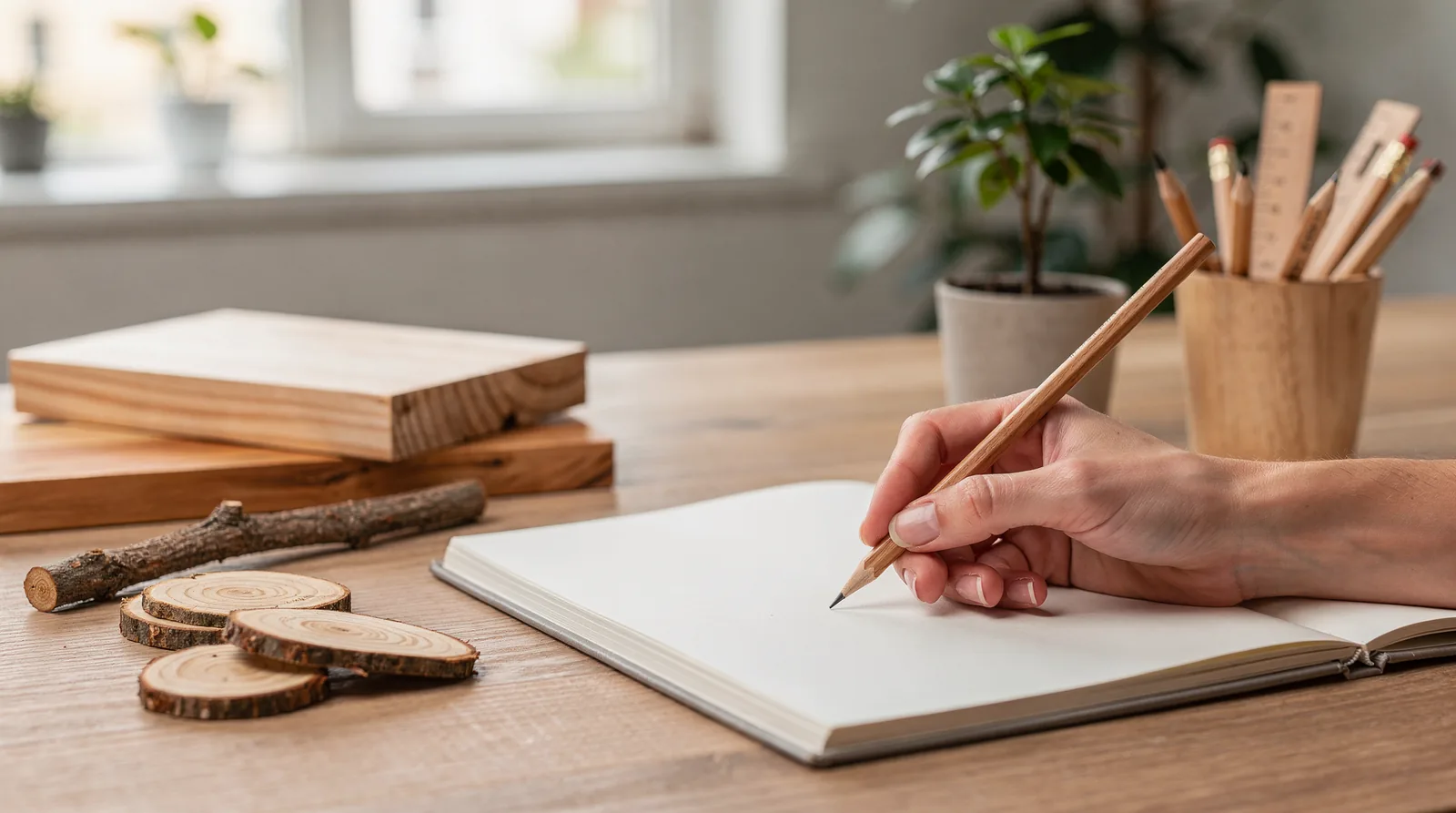
Sustainable stationery begins long before the first stroke of ink touches paper. The real test of a writing tool's eco-credentials lies in its raw materials, and few options rival the story behind a handmade twig pencil. Twig Pencils crafts each pencil from sustainably sourced Winesap apple tree branches, a byproduct of orchard pruning that would otherwise go to waste. Artist h.m. Peavy transforms these offcuts into functional writing instruments, giving each branch a second life as a No. 2 graphite pencil, a colored pencil, or part of a seven-pencil set. This approach sidesteps the 24 trees required to produce a single ton of conventional office paper, a figure that underscores how quickly small choices compound into massive environmental impact.
The conventional stationery industry carries a hidden cost that most shoppers never see. In 2018, global paper consumption reached 422 million metric tons, a number that translates to roughly 10 billion trees felled in a single year. The Bic Crystal, the world's most famous plastic pen, has sold at a rate of 57 units per second since its 1950 debut, leaving over 100 billion plastic pens scattered across landfills. Twig Pencils sidesteps this cycle entirely. Each apple wood pencil retains its natural shape and texture, meaning no two writing instruments are identical. The brand pairs this rustic aesthetic with practical design: a classic tin houses the colorful seven-pencil set. A protective case shields the graphite pencil for travel. Every piece is made in the USA. The wood comes from Winesap apple trees, a variety known for its dense, workable grain.
Choosing sustainable stationery does not require sacrificing performance or charm. A twig pencil writes with the same graphite core as any mass-produced alternative. It carries none of the plastic casing or virgin timber guilt. The paper industry relies on virgin fibers to sustain the paper cycle, as recycled fibers degrade after several uses, which makes the source of your wood pencil all the more critical. When you grip a Winesap branch shaped by h.m. Peavy, you hold a tool that was never destined for a landfill. It was a pruning byproduct, repurposed with intention. That single fact transforms an everyday object into a statement about resourcefulness. It is the reason these pencils appeal to artists, writers, teachers, and nature lovers alike. The loss of that resourcefulness is the real cost of conventional stationery: every plastic pen and virgin-wood pencil that bypasses this cycle carries its environmental burden silently, decade after decade, in a landfill.
How Do You Choose Eco-Friendly Writing Tools?
Choosing eco-friendly writing tools starts with examining the materials and the supply chain behind each pencil. The most reliable choice is a writing instrument made from a byproduct of another industry, such as sustainably sourced apple wood branches, rather than timber harvested solely for pencil production. This approach ensures your purchase does not contribute to deforestation while giving new life to a natural resource that would otherwise go to waste.
Sustainable stationery hinges on material transparency. Look for tools made from renewable resources like wood, bamboo, or recycled metals, and avoid plastic-bodied pens that end up in landfills. The paper industry illustrates the stakes: in 2018, a staggering 422 million metric tons of paper was consumed globally, and creating one ton of conventional office paper requires 24 trees, according to My Green Guide for Stationery Lovers. That same guide notes the Bic Crystal, invented in 1950, has reportedly sold 57 pens a second, leaving over 100 billion plastic pens in existence, many of which languish in dumps. Choosing a wooden pencil over a plastic pen directly reduces that waste stream.
Consider the entire lifecycle of the tool. A pencil made from apple wood branches, like those crafted by artist h.m. Peavy, uses a byproduct of fruit farming, meaning no tree is felled solely for the pencil. These rustic tools are also designed to last. The brand is actively seeking a biodegradable alternative for the ferrule, the metal band that holds the eraser. When you select a pencil, you also avoid the microplastics shed by mechanical pencils and plastic sharpeners, keeping your writing habit clean from tip to tail.
Conclusion
In closing, sustainable stationery represents more than just an eco-conscious choice, it embodies a commitment to quality craftsmanship and environmental stewardship. Handmade twig pencils crafted from sustainably sourced apple wood demonstrate that writing instruments can honor both artistry and the planet. By choosing products made in the USA with thoughtful sourcing practices, you invest in stationery that tells a story of responsible production, making every word you write carry deeper meaning.